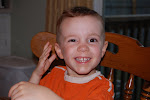
We've decided to begin sharing some of what we've learned with our family and friends. That's you! We have also started a Facebook page for Cullen. You can go there and "like" Cullen's page if you're interested.
Here's a good place to start... Top 10 Facts about Autism. In future posts, we'll take a more personal look at one family's journey into this world--this sadly expanding but ever hopeful subculture--of autism.
 Top 10 Facts about Autism
1. Autism is a neurological and medical disorder in which the parts of the brain that control communication, behavior, social interaction, learning, sensation, and motor coordination aren’t functioning properly.
2. Autism is unique in that it can strike unexpectedly, seemingly out of nowhere. A healthy and neurologically typical infant can suddenly regress into autism between the ages one and two.
3. The rate of autism in 1983 was 1 in 10,000 children.
4. The latest research in the journal Pediatrics reveals that autism affects 1 in 91 children (1 in 58 boys), with 673,000 currently affected. The CDC’s latest study shows a rate of 1 in 110 children (1 in 70 boys). 50,000 new diagnoses will be made yearly.
5. Autism has become one of the most widespread childhood epidemics in recorded history.
6. The exact cause or causes of autism are unknown. It is increasingly affirmed that there are clearly environmental (i.e., not just genetic) factors at play.
7. Each person with autism is affected in different ways and to varying degrees. Some show only a few autistic characteristics, others display many or all.
8. Early signs of autism include lack of eye contact, lack of babbling, lack of engagement with new people, obsessions with certain toys, lack of imaginary play, engagement in obsessive repetitive movements, unusual sleep patterns, and sensory issues (extreme sensitivity to tags in clothing, or to sound, for example).
9. Many children with autism also have medical issues such as gastrointestinal dysfunction, immune deficiency, and seizures.
10. Through nutritional and medical intervention and intensive therapy (such as language, occupational, and behavioral therapy), some children completely recover from autism to the point of losing the diagnosis, while a vast majority make significant improvements. Early detection and intervention is paramount.
Compiled from “The Autism Book” by Dr. Robert Sears.


 /a>
/a>